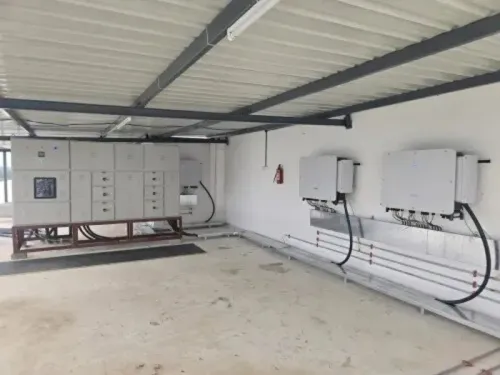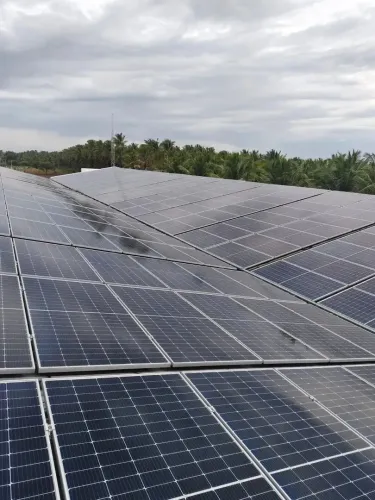
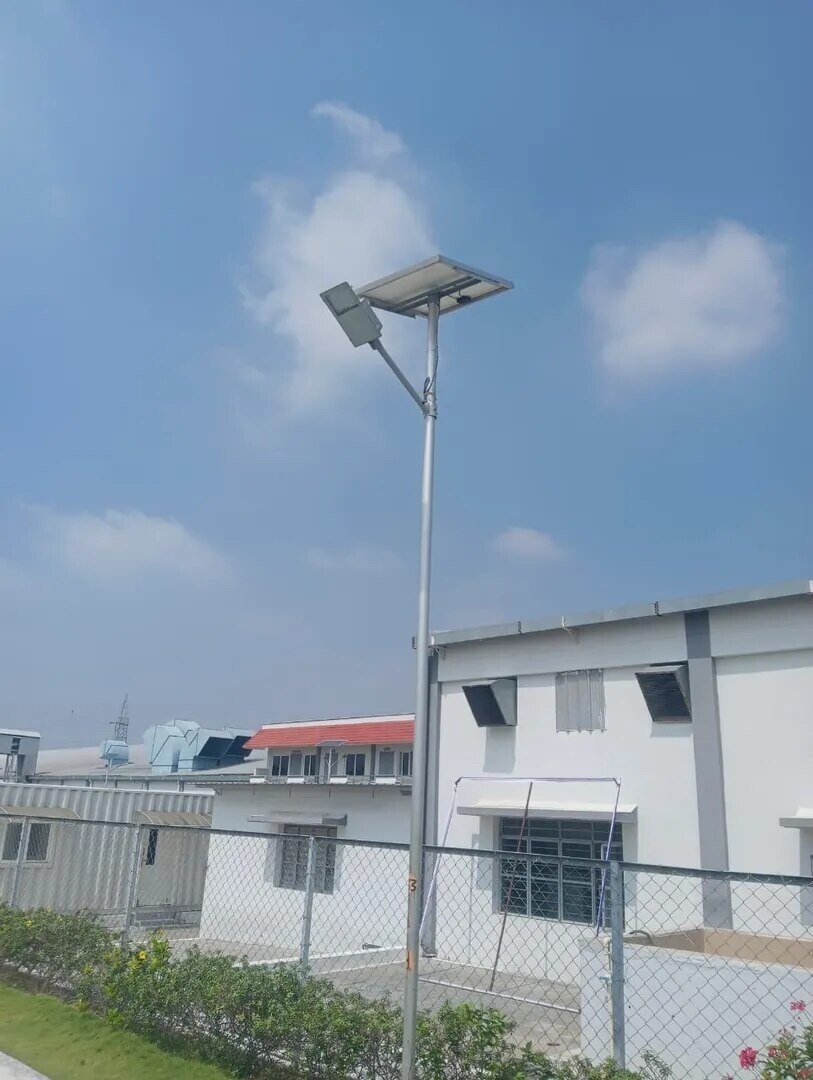
A quotation for a solar street light can cover everything from a complete, tested installation to little more than a lamp, panel and battery. You will be able to identify every included component, check whether civil and electrical work is assigned clearly, and compare bids using the same lighting and operating assumptions.
Key takeaways
- Demand an itemised list covering panels, batteries, luminaires, poles, controllers and protection devices.
- Confirm whether transport, unloading, foundations, wiring, labour and reinstatement are included.
- Match panel, battery and luminaire sizes to the required lighting hours and site conditions.
- Require test results, commissioning records, warranties and an as-built pole schedule at handover.
What should a solar street light package include item by item?
A complete solar street light installation in Coimbatore must show every supplied item, not just a wattage and price per pole. The quotation must also state whether transport, unloading, installation labour, civil work, testing and handover documents are included.
- LED luminaire with stated wattage, optics, mounting interface and IP rating
- Photovoltaic module, module frame and adjustable mounting bracket
- Battery, enclosure and specified usable capacity
- Solar charge controller with dusk-to-dawn sensor or programmed timer
- Hot-dip galvanised pole, outreach arm, base plate and pole-top hardware
- Foundation bolts, nuts, washers, templates and concrete foundation materials
- DC cables, glands, MC4-type connectors and junction boxes
- Fuses, isolators, DC surge protection and cable-protection conduits
- Earthing conductor, earth electrode, clamps and bonding for exposed metalwork
- Fasteners, labels and weatherproof seals
- Installation, alignment, polarity and continuity checks
- Controller settings, night-time switching, luminaire operation and commissioning records
The solar street light package in Coimbatore must place transport to site, unloading, excavation, concrete pouring, pole erection and labour on named bill-of-quantities lines.
List trenching, road or paving reinstatement, traffic control, utility shifting, tree pruning, permissions and unusually deep foundations separately; otherwise an equipment-only price can appear cheaper while leaving the site owner with the civil bill.
Request serial numbers and photographs for the module, battery, controller and luminaire, plus the as-built pole layout. An independent system does not need electricity-board connection work; a grid-connected or hybrid design adds AC cables, switchgear, metering, approvals and protection.
How do the light design and sizing affect the package?
An all-in-one unit places the PV module, LED luminaire, battery and controller in one assembly above the pole. It reduces cabling and installation time, but its battery and electronics are harder to service and the panel can shade the light or collect dust.
A semi-integrated design keeps the panel separate while placing the battery and controller in the luminaire or pole head. A split design mounts the panel, battery enclosure and controller separately, improving access and allowing better panel positioning, but adding cables, junction boxes and theft protection.
| Design | Equipment arrangement | Package effect |
|---|---|---|
| All-in-one | Panel, LED, battery and controller in one head | Fewer cables; harder battery replacement |
| Semi-integrated | Separate panel; battery and controller at the luminaire or pole | Moderate access and wiring |
| Split | Panel, luminaire, battery enclosure and controller separate | More structure, cable and protection work |
The quotation for a solar street light installation in Coimbatore must follow the lighting calculation, not just LED wattage. Require maintained lux and uniformity for the road width, pole spacing, mounting height, outreach and bracket angle. Dusk-to-dawn hours, rainy-season no-sun days, panel orientation and shading determine PV capacity and autonomy.
- Ask for battery chemistry, nominal and usable kWh, allowable depth of discharge, operating-temperature range and replacement warranty.
- Check whether the pole, foundation, enclosure, DC cables, connectors, earthing, surge protection and controller settings match the selected design.
- Reject an unqualified “12-hour backup” claim unless it states operating hours, battery limits and the guaranteed no-sun days.
What must the site survey, foundation and installation work cover?
The survey must confirm that each light will illuminate the intended road, survive local conditions and remain serviceable. Record carriageway width, curves, junctions, pole spacing, setbacks, access for installation, nearby buildings, compound walls, trees, future construction, cleaning access and shading at different times of day.
Mark underground water lines, drains, electrical cables and other utilities before excavation.
Check these site conditions:
- Soil type, bearing condition, groundwater, slope and existing pavement
- Surface drainage and a safe route for stormwater around each foundation
- Pole height, luminaire and panel area, prevailing exposure and wind loading
- Traffic-control needs, lifting access and restrictions on storing materials
- Whether an independent system is intended; a grid-connected or hybrid system adds AC cabling, switchgear, metering and possible utility approvals
The foundation must come from the pole’s structural design, not a copied standard detail. Specify anchor-bolt size and layout, concrete grade, reinforcement, embedment and overturning resistance for the measured soil and wind exposure.
- Set out pole centres and verify utility clearances against the approved road layout.
- Excavate to the designed dimensions, support the sides, and keep the pit free of water.
- Install reinforcement, anchor bolts and any protective conduit; pour and finish concrete with drainage provisions.
- Cure the concrete for the specified period before loading it.
- Erect and plumb the pole, then tighten and protect anchor hardware.
- Mount the panel, luminaire, battery and controller; route DC cables through protected conduit, seal entries and fit fuses or surge protection.
- Check earthing, polarity and cable continuity before switching on. This sequence defines solar street light installation in coimbatore, including civil work often omitted from commercial solar lighting in coimbatore quotations.
What testing and handover evidence should you receive?
A commissioning record must show that each pole works at the specified lighting level, not merely that the LED turns on. For a solar street light package in Coimbatore, require signed test sheets, dated photographs and equipment identification before accepting the installation.
- Verify DC polarity and cable continuity from the PV module to the controller and from the controller to the battery and luminaire.
- Record PV open-circuit voltage and operating voltage in daylight, with the measurement conditions and module serial number.
- Record battery voltage, battery chemistry, nominal capacity, usable energy, depth-of-discharge limit and battery-management-system status where fitted.
- Record controller settings for dusk activation, operating hours, dimming profile, low-voltage cut-off, restart behaviour and charging limits.
- Test automatic night switching and confirm the luminaire remains on for the specified schedule.
- Take night-time readings at agreed points to confirm maintained lux and uniformity, then photograph the illuminated road.
- Inspect pole verticality, bracket angle, module orientation, luminaire aiming and every visible mechanical fastener.
- Attach earth-continuity or earth-resistance results where the design includes earthing, plus records for fuses, isolators, surge protection and enclosure condition.
The handover pack must also include serial-number photographs for the module, battery, controller and luminaire; manufacturer datasheets; signed warranties with claim contacts; maintenance instructions; and an as-built layout showing pole coordinates, pole numbers, cable routes, foundations and equipment fitted.
List exclusions or unfinished works separately, because missing civil reinstatement or protection records can become your cost after acceptance.
How should you compare commercial solar lighting quotations?
Compare bids against one issued schedule, not the quoted wattage or price per pole. For commercial solar lighting in Coimbatore, give every bidder the same lux, uniformity, pole spacing and height, operating hours, rainy-season autonomy and shading assumptions.
| Schedule line | Require in every quote | Mark separately |
|---|---|---|
| PV and battery | PV capacity, battery chemistry, usable kWh, controller settings and protection ratings | Replacement exclusions and degradation limits |
| Structure and civil work | Pole, bracket, foundation design, fasteners, cable lengths, earthing and reinstatement | Deep foundations, trenching, traffic control and utility shifting |
| Installation and proof | Testing, commissioning, serial numbers, photographs and as-built layout | Acceptance test for illumination, switching and operating hours |
| Service | Annual visits, cleaning, remote monitoring, spares and response time | Vandalism, theft and battery-failure responsibility |
For a solar street light package in Coimbatore, assign these points in the contract:
- State who obtains road-opening, landowner, electrical or utility permissions; an independent system has a different scope from a grid-connected or hybrid system.
- Separate the product warranty from performance obligations. Name the replacement response time, local spare availability, battery warranty exclusions and the remedy if lux or operating hours fail.
- Name who cleans modules, inspects poles and batteries, records faults and pays for access equipment. Orbit Solar India Pvt Ltd should be assessed against this completed schedule, not a brochure promise.
Related product
 | Solar Street Light Key Components & Their Functions Solar Panel (PV Panel): Converts sunlight into electrical energy (Direct Current). View product → |
Frequently asked questions
What should a solar street light package in Coimbatore include?
It should list the photovoltaic module, luminaire, battery, charge controller, pole, brackets, cables, connectors, protection devices, fasteners and earthing materials. The quotation must also identify transport, unloading, installation, civil work, testing and documentation.
How do light design and sizing affect a solar street light package?
Luminaire wattage, optical distribution, mounting height, pole spacing, required lighting hours and autonomy determine the panel and battery capacity. Ask for the lighting calculation, battery usable capacity, worst-month solar assumptions and a stated backup target.
What must site survey and installation work cover?
The survey should record pole locations, road width, shading, soil conditions, drainage, underground services and access for delivery. Installation scope should cover excavation, reinforcement, concrete foundation, pole erection, cable termination, earthing, alignment and site reinstatement.
What testing and handover evidence should you receive?
Request commissioning results for charging, dusk-to-dawn operation, battery protection, lighting output, cable insulation, polarity, earthing and mechanical alignment. Receive serial numbers, warranty terms, manuals, test sheets, as-built locations and maintenance instructions.
How should you compare commercial solar lighting quotations?
Compare identical assumptions for illumination, operating hours, autonomy, pole spacing, battery chemistry, panel capacity, warranty period and civil scope. Separate equipment, installation, taxes, transport, maintenance and replacement costs before comparing the total.
Keywords