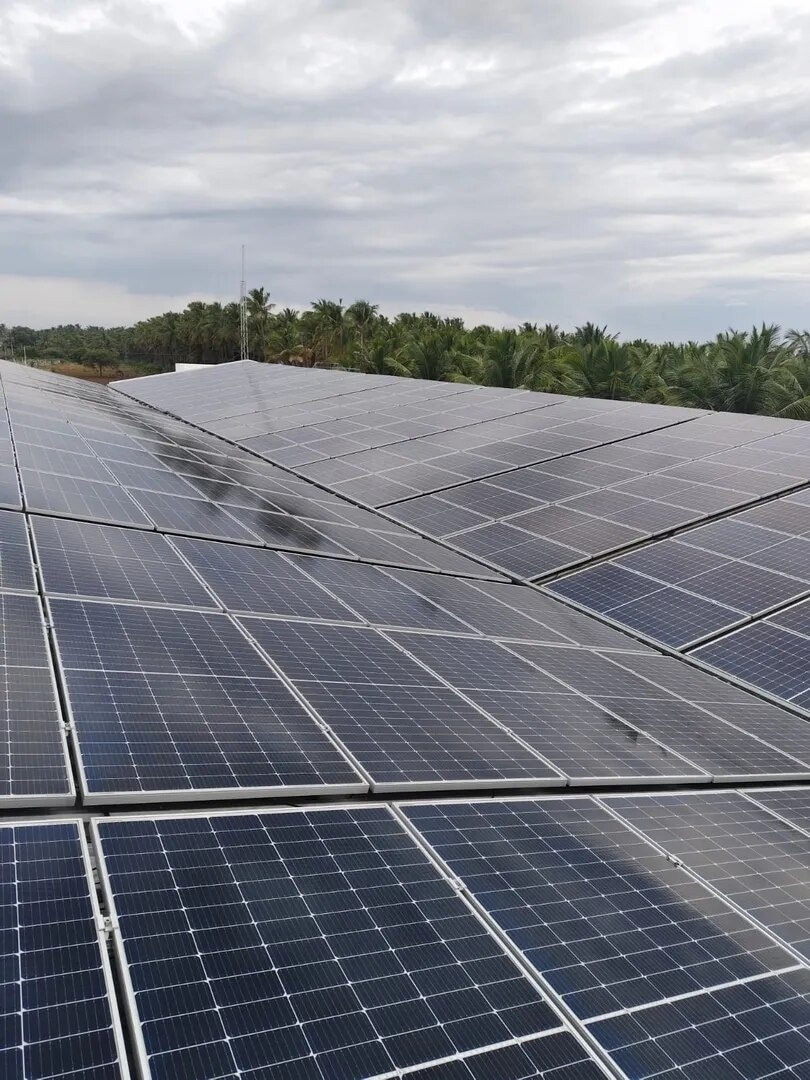
A commercial installation is more than fixing modules to a roof: the scope runs from load and structural checks to utility approval, protection testing, monitoring and handover records. By the end, you will know which measurements, equipment, approvals and service commitments to demand before accepting an EPC quotation.
Key takeaways
- Check factory demand, roof condition and the approved grid connection before quoting.
- Require structural checks, wind-load design and safe access around the panel array.
- Confirm panels, inverters, protection devices, cabling, mounting and site work in writing.
- Collect utility approvals, test results, drawings, warranties and operating instructions at handover.
What is checked before the quotation is prepared?
A useful pre-quotation survey tests three limits: factory demand, roof condition and the approved grid connection. Ask for these records before accepting the commercial rooftop solar plant in Coimbatore installation inclusions:
- At least 12 months of electricity bills, tariff, voltage level, sanctioned load, transformer capacity and main incomer rating.
- 15-minute or hourly load data, roof and structural drawings, roof age, repair plans, drainage, access routes and shadow observations at different times.
- Cable paths, existing earthing points, utility meter location, proposed LT or HT interconnection point, lifting-equipment position and safe worker access.
Annual consumption cannot establish the correct capacity. Compare the factory’s daytime minimum load with the proposed inverter AC output and the export limit at the point of common coupling; oversizing can cause rejected export or forced curtailment.
| Evidence | What it establishes | If omitted |
|---|---|---|
| Load profile | Daytime self-consumption and inverter sizing | Excess generation or curtailment |
| Roof and structural records | Usable area, loading and repair risk | Redesign, leaks or unsafe loading |
| Interconnection details | LT/HT route and export-control location | Approval delays or reverse power |
| Construction constraints | Shutdown, lifting and access requirements | Production disruption and unsafe work |
The survey must record whether the project uses captive self-consumption, net metering, net feed-in, open access or export limitation. For commercial solar plant installation in Coimbatore, obtain a current, connection-specific TANGEDCO checklist before final design because documents and procedures vary by tariff and voltage level.
How are the roof and system design made safe?
Make structural engineering part of the EPC scope before materials reach the site; an unsafe roof can invalidate an otherwise sound commercial rooftop solar in Coimbatore design.
1. Require calculations for roof dead load, local wind uplift, purlins or RCC members, fastener pull-out, maintenance loads and, for ballasted systems, concentrated ballast loads. Record corrosion, loose or damaged members, roof age, fragile areas, asbestos-containing sheets, and restrictions on drilling or walking.
2. Treat roof condition as a cost decision. An old roof near replacement can force module removal and reinstallation, so the bid must state whether sheet replacement, asbestos remediation, waterproofing, repainting and repairs are included or excluded.
3. For RCC roofs, review anchor positions against reinforcement, flashing, waterproofing and drainage. For metal-sheet roofs, confirm clamp compatibility with the sheet profile and purlins, corrosion protection, thermal movement and every penetration. A non-penetrating structure still needs documented ballast, waterproofing and wind-uplift calculations.
4. Issue a layout showing module tilt, row spacing, maintenance clearances, walkways, access routes, fire access and drainage. Protect dissimilar-metal joints against galvanic corrosion.
5. For rooftop solar for factories in Coimbatore, label three different limits: module nameplate capacity in kWp, inverter AC capacity in kW and the utility-approved export limit. Confusing them can produce an oversized system or an invalid connection design.
What equipment and site work does the physical installation include?
A complete commercial solar EPC in Coimbatore quotation must identify every item by equipment, location and responsible party.
Procurement covers photovoltaic modules, mounting structures, DC cables and connectors, cable trays, string combiner boxes and module-level fuses where the string design requires them, inverters, AC combiner or distribution boards, DC and AC isolators, surge protection devices, earthing conductors, monitoring equipment, labels and safety barriers.
The construction checklist should include:
- Unloading, lifting, roof access, structure assembly and module fixing
- Cable support, weatherproof routing and segregation from existing electrical services
- Inverter, combiner, distribution-panel and isolator installation
- Earthing, lightning-protection coordination and emergency isolation
- Access walkways, fire access and roof waterproofing at every penetration
- Monitoring that displays inverter status, DC and AC energy, alarms, grid availability and import or export at the point of connection
The AC drawing must identify whether the plant connects to the factory LT panel, HT panel, dedicated transformer or another approved point of common coupling.
For an HT-connected facility, an export-control or zero-export system may use CTs or a meter at that point; limiting inverter output alone does not prove that reverse power cannot reach the grid. The method statement for commercial solar plant installation in Coimbatore must define production shutdowns, permit-to-work controls, lifting plans and fragile-roof protection.
A quotation listing only modules, inverters and structure is incomplete.
Which utility approvals, tests and handover records are included?
A commercial rooftop solar plant in Coimbatore installation inclusions must name the approval owner. Confirm whether the EPC provider prepares and submits the TANGEDCO application, obtains the current checklist for your tariff and voltage level, and coordinates technical feasibility or connectivity approval, sanctioned-load and transformer checks, inspection, meter replacement or synchronisation, and commissioning.
| Export arrangement | Evidence to request | Interconnection point |
|---|---|---|
| Net metering | Approved bidirectional-meter arrangement and utility correspondence | Utility-approved meter point |
| Net feed-in | Export agreement, tariff approval and meter details | Declared export meter |
| Captive consumption | Captive-use approval and protection scheme | Factory connection |
| Export limitation | Zero-export settings, CT or meter location and test record | Point of common coupling |
Do not accept “net metering” as a specification. The commercial rooftop solar in Coimbatore contract must identify the approved arrangement and connection point.
Before energisation, require signed records for:
- Anti-islanding and inverter-setting verification
- Insulation resistance, polarity and protective-conductor continuity
- Earth resistance, phase sequence and surge-protection checks
- Power-quality measurements and export-control operation
The commissioning dossier should contain the as-built single-line diagram, string and inverter schedules, module and inverter serial numbers, datasheets, structural calculations, protection settings, test reports, utility correspondence, meter details, warranty documents and shutdown procedures.
Handover must include monitoring credentials and proof that the dashboard shows inverter status, DC and AC energy, alarms, grid availability, and import or export at the connection point—not generation alone. This traceability exposes failed feeders, approval disputes and warranty problems.
What support should the EPC provider deliver after commissioning?
A handover is not the end of the contract. Require a written operations-and-maintenance schedule that sets cleaning from measured soiling losses, not an arbitrary calendar interval.
The schedule must cover inspection of fasteners, clamps, cable supports and connectors; water ingress, bird activity and vegetation; inverter-filter service; thermographic checks for hot spots; and protection-device testing. It must also define response times, remote-monitoring duties, spare-parts handling, warranty boundaries and responsibility for utility faults.
Monitoring must show inverter status, DC and AC energy, alarms, grid availability, historical performance and import or export at the point of common coupling. Ask how the provider will detect a tripped AC feeder or failed export-control meter when inverter-side generation still appears normal.
Compare proposals using the same evidence:
| Item | Require from the provider | Why it matters |
|---|---|---|
| Structural and connection records | Calculations, connection design and export-control details | Confirms roof safety and utility compliance |
| Handover file | Commissioning dossier, protection settings, test reports and warranty records | Makes faults and claims traceable |
| Service commitment | Defined maintenance schedule, response times and spare-parts process | Prevents prolonged downtime |
| Site monitoring | Point-of-common-coupling data, not inverter output alone | Reveals feeder and meter failures |
A commercial solar EPC in Coimbatore should also review roof leaks, corrosion and access barriers. For rooftop solar for factories in Coimbatore, Orbit Solar India Pvt Ltd can be compared on this checklist rather than equipment price alone, since later roof repairs, shutdown coordination or utility documentation can raise the project cost.
Related products
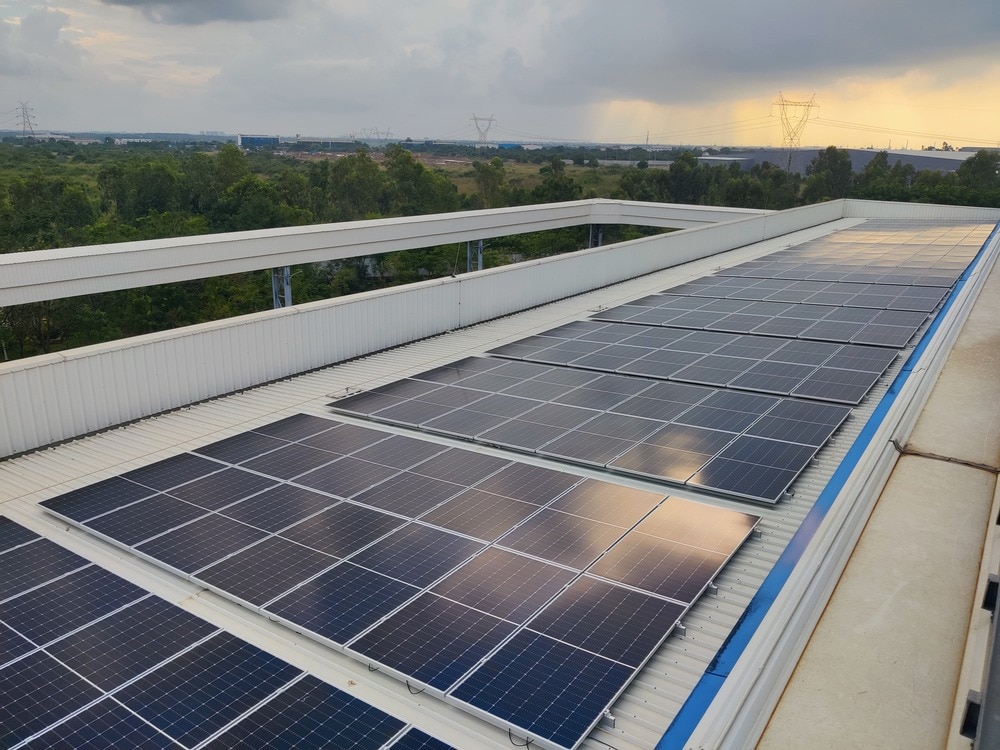 | Commercial Rooftop Solar Power Plant Commercial Rooftop Solar Power Plant Commercial rooftop solar power plants are large-scale photovoltaic (PV) systems installed on commercial, industrial, or institutional buildings to... View product → |
 | Industrial Rooftop Solar Power Plant Industrial Rooftop Solar Power Plant (RCC ROOF SHEETS ROOFTOP) Industrial rooftop solar plants, installed on factory and warehouse RCC or metal sheet roofs, convert sunlight into electricity, significantly... View product → |
Frequently asked questions
What is checked before a commercial rooftop solar quotation in Coimbatore?
The survey should review electricity bills and demand, the sanctioned load and grid connection, roof age and condition, structural capacity, shading, access, cable routes and space for inverters and protection equipment.
How are a commercial rooftop solar plant and its roof made safe?
The EPC provider should verify the roof structure, account for panel and mounting-system weight plus wind loads, design safe walkways and access, protect waterproofing, and specify earthing, lightning protection and electrical isolation.
What does the physical installation include?
The scope should identify photovoltaic modules, mounting structures, inverters, DC and AC cables, connectors, combiner or protection boxes, earthing, lightning protection, monitoring equipment, labels, supports, cable routes and all required roof and electrical work.
Which approvals, tests and handover records should you receive?
Ask for utility application and approval records, inspection documents, insulation-resistance and continuity results, polarity and voltage checks, inverter commissioning records, generation-monitoring setup, single-line diagrams, as-built drawings, warranties and operating instructions.
What support should a commercial solar EPC provider deliver after commissioning?
Agree on response times, remote monitoring, fault alerts, preventive-maintenance visits, cleaning guidance, warranty coordination, replacement procedures and training for the person responsible for operating the plant.
Keywords