

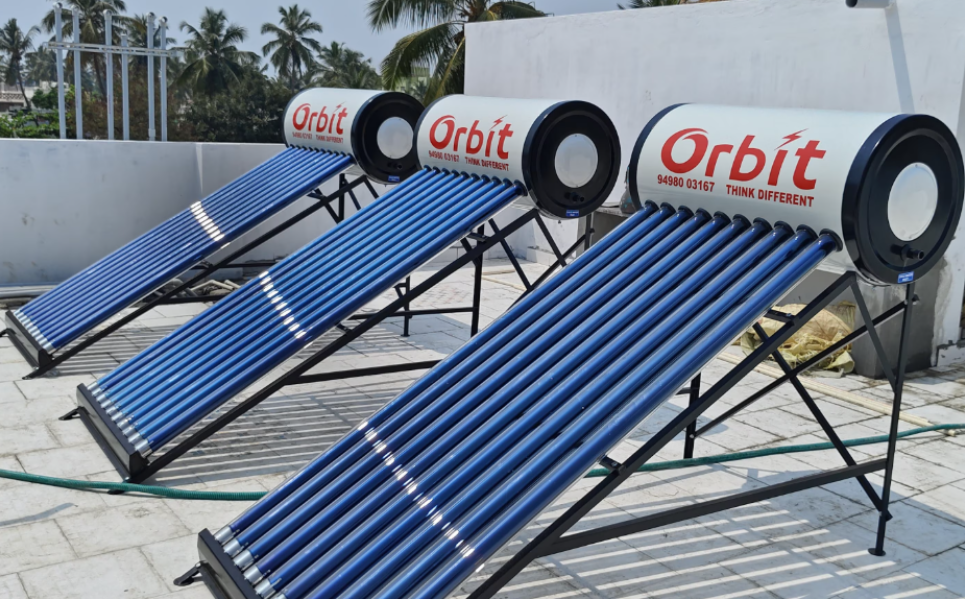
Large facilities can consume substantial amounts of energy simply to produce hot water. Hotels, hospitals, hostels, food-processing units, institutional kitchens, and certain manufacturing operations may require hundreds or thousands of litres at different temperatures throughout the day.
For facilities in Kodaikanal, Tamil Nadu, selecting an industrial solar water heater begins with understanding demand rather than choosing a tank capacity from a catalogue.
Calculate Daily Hot-Water Demand
The first question is how much hot water the facility actually uses.
This calculation should consider:
- Number of users
- Occupancy levels
- Operating shifts
- Hot-water fixtures
- Process requirements
- Peak usage periods
- Required water temperature
- Seasonal changes
A hotel, for example, may experience concentrated demand during morning and evening hours. An industrial process may require water during defined production periods.
These patterns influence both capacity and system configuration.
Identify the Required Temperature
Not every application needs water at the same temperature.
Domestic bathing, kitchen operations, cleaning, process applications, and institutional uses can have different requirements.
The design should distinguish between total water consumption and the portion that genuinely requires heating.
Heating unnecessary volumes or designing around an unrealistic temperature requirement can result in inefficient system sizing.
Evaluate Available Collector Area
Large hot-water demand requires sufficient solar collection capacity.
The installation area should be assessed for orientation, shading, structural suitability, accessibility, and existing rooftop equipment.
In hill locations such as Kodaikanal, site-specific building orientation and surrounding vegetation or structures can significantly influence available solar exposure.
Understand Storage Requirements
Hot-water storage helps bridge the difference between solar collection periods and actual usage times.
Storage capacity should correspond to the demand pattern and overall system design.
Tank insulation is particularly important because heat retained in stored water can influence practical availability later in the day.
The plumbing network should also be planned to reduce unnecessary heat loss.
Consider Seasonal and Weather Variations
Solar thermal systems operate according to available solar energy.
Facilities requiring dependable hot water throughout the year should therefore understand how the proposed system handles lower solar availability and what auxiliary heating arrangement is required.
Backup heating should be considered part of the complete system rather than an afterthought.
Review Water Quality
Water characteristics can affect solar water-heating equipment and plumbing.
Scaling or other water-related issues may influence maintenance requirements and component selection.
Where water quality is a concern, it should be discussed during the design stage so that the proposed configuration reflects actual operating conditions.
Examine Existing Heating Infrastructure
Many facilities already use electrical heaters, boilers, heat pumps, or other water-heating equipment.
A solar system does not always need to replace this infrastructure entirely.
It may instead be integrated to reduce the conventional energy required to raise water to the desired temperature.
Understanding the existing arrangement helps designers develop a practical integration strategy.
Measure Performance in Useful Terms
Facility managers should know what they expect the system to accomplish.
Useful measures may include solar-heated water availability, conventional energy displacement, operating cost changes, system uptime, and maintenance requirements.
Orbit Solar India Pvt Ltd provides solar water-heating solutions for different capacities and applications. For Kodaikanal facilities, an assessment can consider demand volume, temperature, site conditions, existing heating equipment, storage, and operational requirements.
Industrial solar water heating works best when it is treated as a thermal engineering system rather than simply a large version of a domestic water heater. Accurate demand assessment, suitable collector capacity, insulated storage, proper integration, and planned backup arrangements together determine whether the installation meets the facility's practical needs.


