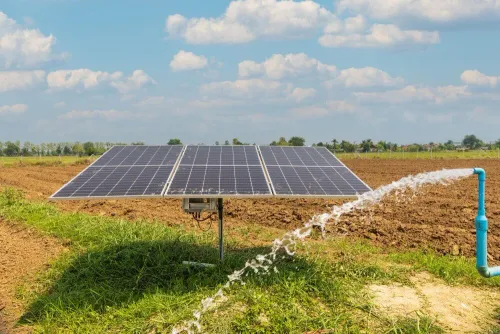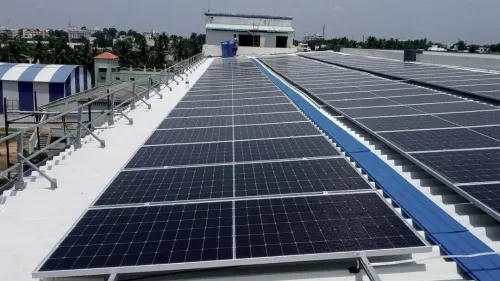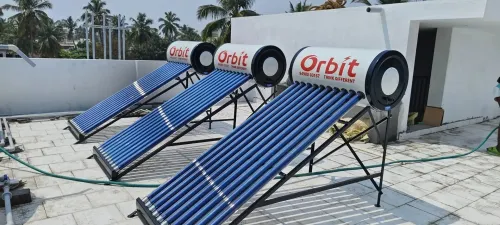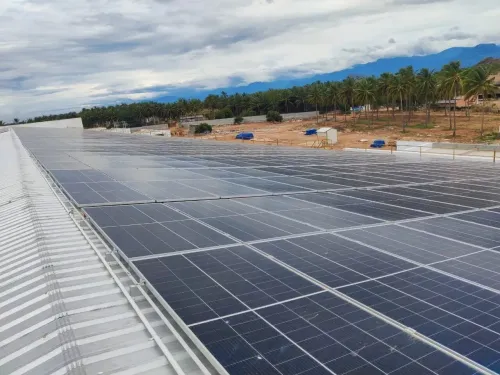
Yes, but rain-ready performance depends less on whether water falls on the lamp than on how much energy the panel collects across several dark days. You will be able to assess charging, battery autonomy, enclosure protection, site drainage and commissioning evidence before approving a system for a Coimbatore property.
Key takeaways
- Size autonomy for cloudy days, nightly hours and required lighting output.
- Choose sealed enclosures, protected cable entries and surge protection for driving rain.
- Inspect shade, drainage, mounting strength and flood risk before installation.
- Test charging, battery backup, illumination and protection devices before handover.
Will a solar street light keep working through several rainy days?
Yes—but several overcast days can leave a solar street light short of energy before dawn. Rain itself is not the main sizing variable; reduced solar irradiation, the required nightly operating period and battery autonomy determine whether the light survives the sequence.
A unit that runs all night after one sunny day can progressively dim or shut down after repeated low-charge days.
| Condition | Charging effect | What to expect |
|---|---|---|
| Light rain with bright cloud | Diffuse light still reaches the panel | Charging continues, but at a reduced rate |
| Dense overcast | Irradiance falls sharply | The battery may not recover its overnight discharge |
| Heavy monsoon showers | Very little usable sunlight during the storm | Several such days can consume the reserve |
Evaluate solar street lights for monsoon in Coimbatore with a worst-month energy calculation, not the panel’s peak-watt label or a daytime demonstration. The calculation must match the lamp’s nightly hours and include controller losses, permitted battery depth of discharge and end-of-life capacity.
Ask for autonomy stated as a number of low-solar days at the specified load. “Three days backup” means little if it assumes a new, fully charged battery while the design requires full brightness all night.
Solar light performance in rain also depends on maintenance: rain removes loose dust, but bird droppings, oily deposits, cement dust and mud can continue shading the panel. Inspect it after prolonged rain and clean visible deposits.
How much battery backup does a monsoon installation need?
Specify battery autonomy as a number of low-solar days at the required nightly load, not as a vague “three days backup” claim. The calculation must use the battery’s end-of-life capacity, permitted depth of discharge, controller losses and the actual LED operating schedule.
1. Define the load in watt-hours per night. Include the LED output level, controller consumption and the hours from dusk to dawn. A solar street light for commercial premises that dims to 30% after midnight needs a different battery than one running at full output all night.
2. Use a worst-month energy calculation for the Coimbatore site. Size the battery for the selected autonomy period after allowing for weak diffuse sunlight, not from the panel’s peak-watt rating or one sunny-day result.
3. Specify the control profile in writing: full output during busy hours, scheduled dimming during quiet periods, motion-triggered boosting if used, and low-voltage cut-off. Dimming extends autonomy, but an undocumented setting can leave a roadway dark when traffic is highest.
4. State the battery’s usable energy at end of life, not its new nameplate capacity. Ask for the assumed depth of discharge, charging efficiency and replacement threshold.
For monsoon ready solar street lights, test the controller at dusk and dawn and confirm the intended light level after the battery has completed the stated low-solar-day cycle. A fully charged daytime demonstration proves little; measure night-time runtime and battery state of charge instead.
Which enclosure and electrical protections matter in driving rain?
The complete installed assembly needs protection, not just an IP-rated lamp housing. For weather resistant solar street lighting, check the controller, battery box, junctions, connectors, cable glands and cable entries separately; one loose gland can defeat a sealed luminaire during wind-driven rain.
| IP rating | Protection | Limitation |
|---|---|---|
| IP65 | Dust-tight and protected against water jets | Does not cover the more severe IPX6 powerful-jet test |
| IP66 | Dust-tight and protected against powerful water jets | Does not prove temporary immersion or continuous submersion |
| IP67 | Dust-tight and protected against temporary immersion | Does not automatically cover continuous submersion or every cable-entry arrangement |
Ask the installer to provide:
- Correctly tightened, downward-facing cable glands with strain relief; seal unused entries and inspect gaskets for cuts, flattening or age damage.
- Enclosure material and finish, UV stability, stainless or corrosion-resistant fasteners, and a stated seal-replacement interval. IP testing alone proves none of these.
- Drainage or pressure-equalisation provisions that prevent pooled water while avoiding a direct path into the enclosure. A suitable breather can reduce condensation caused by daily heating and cooling.
- A suitably rated surge protective device, effective earthing and bonding, and protection for the controller and LED driver—not only the panel circuit.
- Separate evidence for the battery enclosure, pole wiring and junction boxes. IEC 61215 and IEC 61730 cover photovoltaic modules, not the complete street-light assembly.
A water-jet inspection after installation, followed by opening the enclosures for moisture, gives stronger evidence than a rating printed on one component.
What must you check at the Coimbatore site before installation?
Check the property before selecting the pole or panel: tilt, shade, water movement, wind exposure and cleaning access determine whether solar street lights for monsoon in Coimbatore keep charging after bad weather.
1. Set the panel tilt for the site latitude and confirm that its lower edge sheds water rather than holding a muddy film. Survey shade from trees, buildings, boundary walls and nearby poles during morning and afternoon; even a narrow shadow across part of a module reduces charging.
2. Inspect the ground after rain, or trace the site’s flow paths. Keep the pole foundation, battery box and cable entries above likely ponding, and provide firm drainage away from them. Saturated soil can loosen a foundation.
3. Verify the mounting surface, anchor-bolt size, concrete condition and corrosion protection against the specified wind load. A rigid pole that rocks in wet soil will strain cables and misalign the panel.
4. Record existing grime: bird droppings, oily deposits, cement dust and mud survive rain even when loose dust is washed away. Note whether a worker can safely reach the module without closing a road or using specialist access equipment.
5. Define an inspection trigger after prolonged rain and clean the panel when visible soiling or charging data shows loss. Include cable glands, junctions and the battery enclosure in that inspection.
This site record gives you a practical baseline for solar light performance in rain, rather than relying on a clear-day demonstration.
How do you prove the system is monsoon-ready before handover?
A signed handover pack, not a bright daytime demonstration, proves whether monsoon ready solar street lights are fit for service. Require the supplier to demonstrate the worst-month energy calculation, required nightly hours, battery autonomy, maintained illuminance and uniformity targets, wiring diagram, datasheets, IP ratings for each enclosure, and the maintenance schedule.
- Record dusk start-up, programmed dimming, full-output periods and dawn shut-off across a complete night.
- Measure charging current under representative overcast conditions and record battery state of charge before and after operation.
- Inspect cable glands, seals, fasteners, drainage, junction boxes and the battery enclosure; identify each component’s IP65 or IP66 rating separately.
- Perform the specified controlled water-jet or enclosure-integrity check, then inspect for moisture, tracking or malfunction.
- Check panel soiling and confirm the cleaning and post-prolonged-rain inspection procedure.
| Evidence | What it proves | What it does not prove |
|---|---|---|
| Night test | Illumination, uniformity and controls meet the design | Multi-day energy sufficiency |
| Worst-month calculation | Battery and panel sizing covers low irradiation | Physical water resistance |
| Water-jet check | Enclosures resist the tested water exposure | Corrosion, UV damage or ageing seals |
For a solar street light for commercial premises, reject acceptance if the supplier reports only LED wattage, initial lumens or a fully charged battery. Ask Orbit Solar India Pvt Ltd to state seal-replacement intervals, enclosure finish, fastener material and the charging-loss trigger for cleaning in its weather resistant solar street lighting handover documents.
Related product
 | Solar Street Light Key Components & Their Functions Solar Panel (PV Panel): Converts sunlight into electrical energy (Direct Current). View product → |
Frequently asked questions
Will a solar street light keep working through several rainy days?
It can if the battery stores enough energy for the required nightly operating period and reduced charging during overcast weather. Rain is not the only design factor; solar irradiation, lighting load and battery autonomy determine performance.
How much battery backup does a monsoon installation need?
Calculate backup from the light’s nightly operating hours, power consumption and the number of low-sun days the project must cover. Confirm the battery’s usable capacity rather than relying only on its nominal amp-hour rating.
Which enclosure and electrical protections matter in driving rain?
Specify a sealed outdoor enclosure with a stated IP rating, weatherproof cable glands, covered connectors and corrosion-resistant hardware. Include correctly rated fuses, earthing and surge protection for the site’s exposure and electrical layout.
What must you check at the Coimbatore site before installation?
Check panel shading, roof or pole strength, drainage, flood exposure, cable routes, service access and the required lighting schedule. Position the panel to receive unobstructed sunlight and keep equipment away from standing water.
How do you prove the system is monsoon-ready before handover?
Record the panel, battery and light specifications, then test charging, illumination, operating hours, battery backup, cable sealing and protection devices. Inspect the installation after rain and document the results for handover.
Keywords