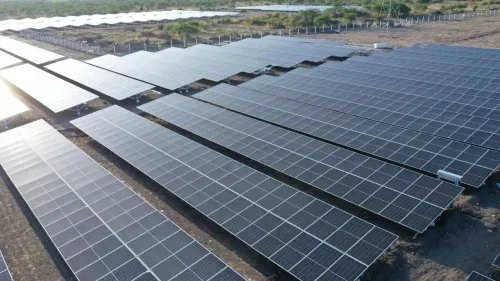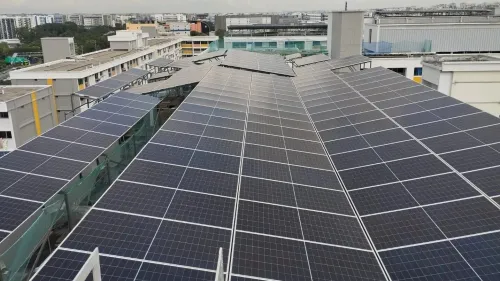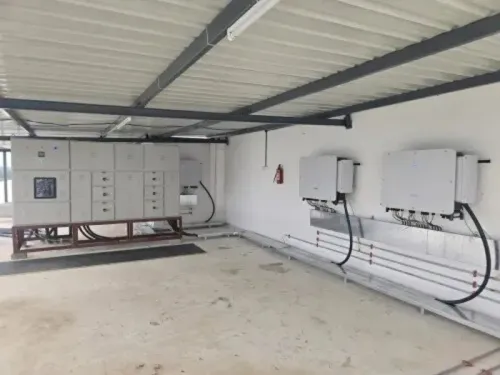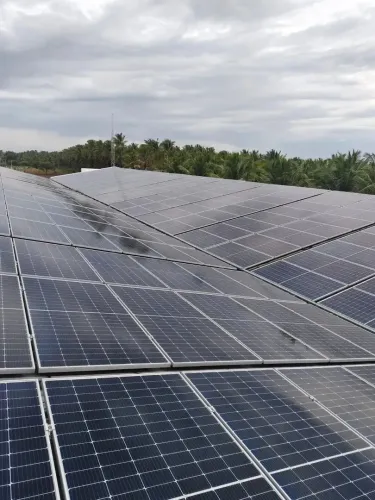
A commercial solar plant can lose output through soiling, heat, loose connections, inverter derating, grid faults, or a failed meter even when the panels look normal. By the end, you will know what a complete maintenance schedule includes, how to check performance before authorising repairs, and how to compare Coimbatore service companies and contracts.
Key takeaways
- Compare generation with the commissioning baseline before approving repairs.
- Inspect inverters, protections, metering and cables—not only panel surfaces.
- Schedule cleaning around dust, bird droppings and monsoon conditions.
- Demand test results, fault records and response times in every maintenance contract.
What commercial on-grid maintenance must cover
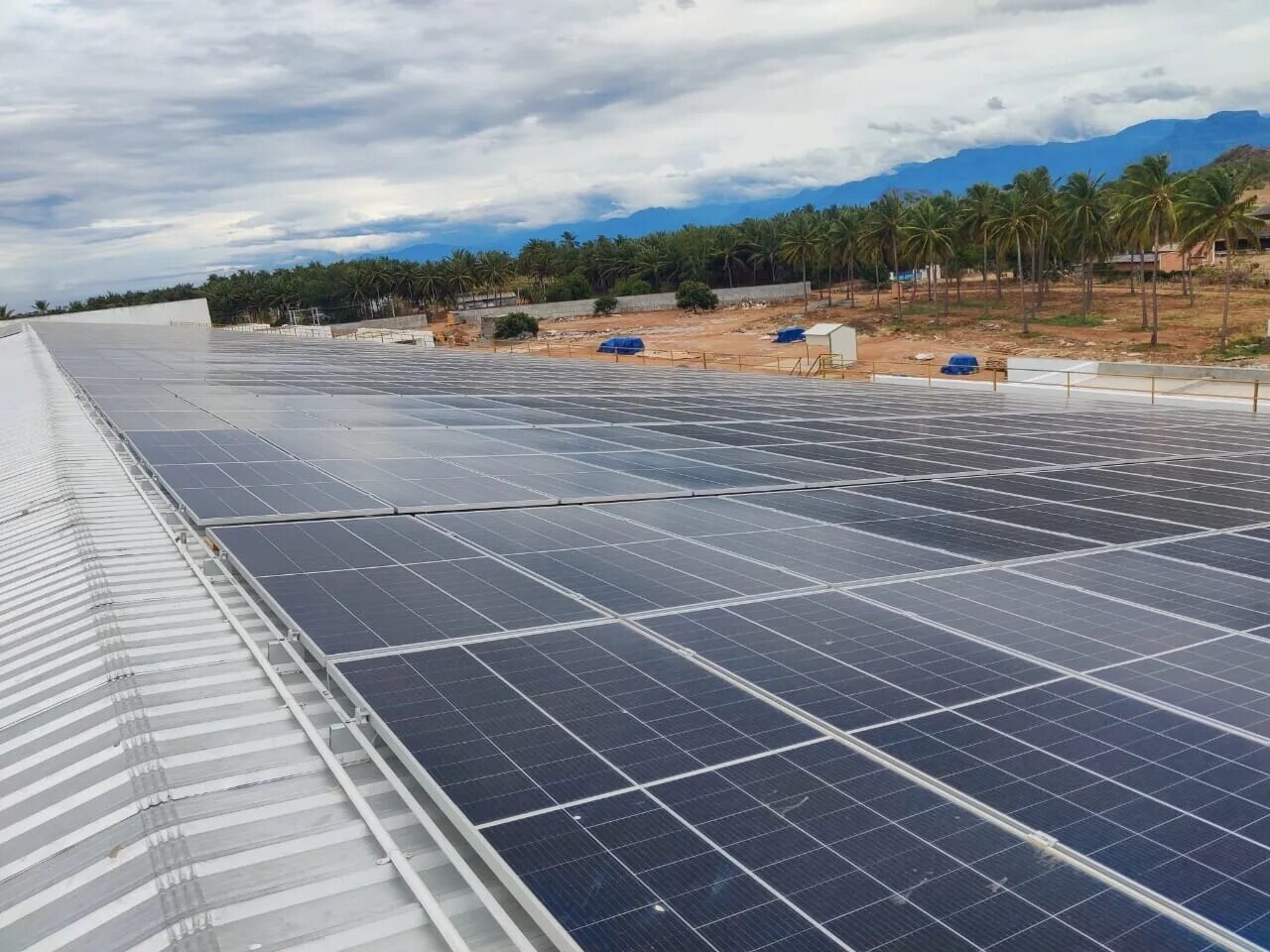
A proper contract covers more than panel washing. Commercial on grid solar maintenance in Coimbatore should protect the DC array, inverters, AC distribution, transformer, protection systems, metering and monitoring, while comparing performance with a commissioning baseline.
- Monitor generation, inverter alarms, grid voltage, frequency and plant availability remotely.
- Inspect modules, cables, connectors, earthing, isolators, combiner boxes and mounting hardware; clean modules using a site-appropriate method.
- Service inverter ventilation, including filters, heat sinks and cooling fans. Follow the manufacturer’s cleaning procedure; opening an enclosure can damage its ingress protection and warranty.
- Test insulation resistance, terminal torque, surge-protection indicators, thermographic hotspots and protective devices, then record the results.
- Keep the string map, as-built single-line diagram, inverter settings, meter readings, photographs and test reports current.
- Investigate low generation by separating array output from low export caused by site load, grid conditions or metering faults.
Commercial solar plant maintenance in Coimbatore should define response time separately from restoration time and state what counts as plant unavailability. During an emergency, technicians must isolate equipment safely, preserve inverter event logs, identify the fault before resetting anything and provide a written cause, repair action and return-to-service test.
A grid-tied system also shuts down during a utility outage; backup requires batteries, protected loads and changeover controls.
The inspection schedule and site checklist that prevent avoidable failures
Check the plant’s monitoring dashboard every day, not just the utility meter. A plant can generate normally while exports fall because site consumption has increased, so compare inverter AC output, irradiance, string currents, grid voltage, alarms, and the utility meter.
1. Daily: Record generation, inverter status, specific yield, and abnormal alarms. Check planned shutdowns, grid interruptions, and net-meter readings; escalate repeated trips rather than repeatedly resetting the inverter.
2. Monthly: Walk the array and equipment areas. Look for soiling, bird droppings, cracked modules, hot-spot discoloration, new shade, loose clamps, damaged cables, connector heating, vegetation, water ingress, and corrosion. Inspect combiner boxes, DC isolators, AC boards, transformers, and meter seals.
3. Quarterly: Measure string currents and compare them with the string map. Check AC voltage, phase balance, terminations, protective-conductor continuity, structure bonding, and cable routing. Confirm that no power and communication cables share unsafe routes.
4. Every six months: Service inverter ventilation using the manufacturer’s procedure; clean filters and heat sinks and test cooling fans without opening sealed enclosures incorrectly. Inspect DC and AC surge-protection indicators, earthing connections, and thermographic hotspots.
5. Annually: Repeat insulation-resistance and earth-continuity tests, verify inverter settings, protection trips, transformer condition, and net-meter accuracy, then update photographs and the single-line diagram. After lightning, inspect surge protection and bonding immediately.
This schedule forms the core of commercial on-grid solar maintenance in Coimbatore, where dust, heat, humidity, monsoon water, and industrial corrosion accelerate failures. Record every result for later comparison.
How Coimbatore conditions affect cleaning and performance checks
Good commercial on grid solar maintenance in coimbatore starts with condition-based cleaning and measurements, not a fixed calendar. Record irradiance, module temperature, inverter AC output, string currents and utility-meter export together; a higher site load can reduce export while the array generates normally.
- Dust: measure soiling loss before scheduling washing, especially near construction or busy roads. Clean cool modules with soft tools and manufacturer-approved water; abrasive brushes or hot-water washing can scratch glass or cause thermal shock.
- Monsoon rain: inspect after heavy showers for mud bands, blocked drains, loose connectors and water ingress instead of assuming rain restored output.
- Humidity: check condensation, insulation resistance and enclosure seals. Moisture can create leakage faults.
- Heat: inspect inverter filters, heat sinks and cooling fans. Thermal derating can precede failure; follow the manufacturer’s cleaning procedure without opening sealed enclosures unnecessarily.
- Bird droppings: remove deposits promptly because small shaded patches create hot spots and disproportionate losses.
- Industrial corrosion: inspect module frames, cable lugs, fasteners, switchgear and transformer terminations for rust or residue; photograph and trend corrosion.
- Vegetation: cut shading growth and keep plants away from inverters, cable routes and drainage paths.
Repeat the same measurements after cleaning, then compare performance ratio and specific yield with the commissioning baseline. That separates soiling from inverter, grid or sensor faults.
How to troubleshoot low generation before calling a repair company
Start with inverter AC output, irradiance, string currents, grid voltage, and the utility meter; export alone can mislead when site consumption rises.
1. Check the inverter event log and shutdown schedule. A recorded grid outage, high voltage, frequency trip, maintenance permit, or zero AC output with normal DC input points to the grid or planned shutdown, not the array. Do not reset before recording the fault code and time.
2. Compare string currents under steady sunlight. One weak string indicates a connector, fuse, cable, module, or MPPT fault; all strings low together suggests heavy soiling, cloud, shading, or a sensor error. Inspect new shadows from vegetation, structures, and bird droppings before arranging business solar system troubleshooting.
3. Compare inverter-reported irradiance with a clean reference meter. Normal sunlight with low reported irradiance indicates a failed or dirty sensor. Normal DC input but reduced AC output, heat alarms, blocked filters, failed fans, or clipping indicates inverter derating.
4. Check AC voltage, phase balance, frequency, and cable temperatures. Voltage drop or a hot termination identifies cable loss or a loose connection. Normal inverter output with low utility-meter export means a net-meter reading problem or increased site load.
For on-grid solar repair in Coimbatore, provide the technician these readings, photographs, event logs, and shutdown records before approving replacement.
What a proper inverter and electrical repair visit should test
Before resetting an inverter, the technician must preserve evidence and prove the circuit is safe. A rushed reset can erase the fault history while leaving high grid voltage, a damaged string, or an insulation fault unresolved.
1. Record the inverter model, serial number, event and alarm codes, trip time, operating conditions, recent configuration changes, and photographs of displays, terminals, cables, and damage. Do not clear the history first.
2. Isolate AC and DC sources under lockout/tagout, prevent reconnection, and verify absence of voltage where practicable. PV modules still produce hazardous DC in daylight; never disconnect live DC connectors. Use arc-flash controls and suitably rated instruments.
3. Measure and record each phase’s AC voltage, frequency, current, phase balance, and earth continuity. Check inverter output against irradiance, string currents, the site load, and the utility meter so low export is not mistaken for low generation.
4. Test DC insulation resistance, polarity, open-circuit voltage, string current, connector condition, cable damage, and combiner-fuse operation. Inspect AC and DC terminals for heat damage and verify torque against the manufacturer’s specification.
5. Check surge-protection indicators, isolators, earthing, cooling fans, filters, heat sinks, airflow, and enclosure condition. Follow the manufacturer’s cleaning method; opening an enclosure can compromise ingress protection.
6. Compare settings and firmware with the approved baseline before replacing parts. A documented solar inverter service in Coimbatore or on grid solar repair in Coimbatore should state the measured cause, corrective action, and post-repair test results.
How to compare commercial solar maintenance companies and contracts
Do not compare annual fees first. Compare the evidence a provider will create, the equipment it will touch, and the time it promises to act.
For commercial on grid solar maintenance in coimbatore, require a written scope covering modules, strings, combiner boxes, DC isolators, inverters, AC panels, transformers, metering, earthing, surge protection, monitoring, safety, and emergency repair.
| Contract point | Evidence to demand | Reject if |
|---|---|---|
| Technical scope | Inspection tasks, test methods, exclusions, and named AC and DC responsibilities | The provider covers panels and inverter cleaning but excludes cables, protection, transformer, or meter coordination |
| Baseline records | String map, as-built single-line diagram, inverter settings, meter readings, insulation tests, thermography, and dated photographs | No commissioning dataset exists for comparison |
| Response time | Separate clock for acknowledgement, technician arrival, remote diagnosis, and escalation | “Prompt response” is the only promise |
| Restoration time | Target to restore generation, parts process, and definition of plant unavailability | It counts only total shutdown and ignores partial loss, export limits, or grid outages |
For commercial solar plant maintenance in coimbatore, ask how reports separate low PV generation from low export caused by site load or grid conditions. A proper solar inverter service in coimbatore records fault history before resetting equipment. Orbit Solar India Pvt Ltd should be judged by these deliverables, not by installation experience alone.
Related products
 | Commercial Rooftop Solar Power Plant Commercial Rooftop Solar Power Plant Commercial rooftop solar power plants are large-scale photovoltaic (PV) systems installed on commercial, industrial, or institutional buildings to... View product → |
 | On Grid Solar Power Plant An On-Grid (or grid-tied) solar power plant is a system that works directly with the utility grid, allowing users to power their homes with solar... View product → |
Frequently asked questions
What should commercial on-grid solar maintenance in Coimbatore cover?
It should cover the DC array, module mounting, DC cabling, combiner boxes, inverters, AC distribution, transformer, protection systems, metering and monitoring. The provider should compare performance with the commissioning baseline.
How often should a commercial solar plant be inspected?
Use routine monitoring and scheduled site inspections. The checklist should include module condition, shading, cable damage, connector heating, inverter alarms, earthing, surge protection, breaker operation, transformer condition and meter readings.
How do Coimbatore conditions affect solar maintenance?
Dust, bird droppings, humidity, heat, monsoon rain and nearby industrial activity affect soiling, corrosion, insulation and cooling. Cleaning and performance checks should follow measured soiling losses and site conditions rather than a fixed calendar alone.
What can you check before calling for on-grid solar repair in Coimbatore?
Check the monitoring portal, inverter display, AC and DC isolators, grid availability, visible cable damage, unusual shading, tripped breakers and recent weather. Record alarm codes, timestamps and generation values before contacting a repair company.
What should a solar inverter service visit test?
The technician should review fault logs, measure DC string voltage and current, verify AC voltage and frequency, inspect ventilation and terminals, test earthing and insulation resistance, check protective devices and confirm communications and meter accuracy.
Related product
 | Industrial Rooftop Solar Power Plant Industrial Rooftop Solar Power Plant (RCC ROOF SHEETS ROOFTOP) Industrial rooftop solar plants, installed on factory and warehouse RCC or metal sheet roofs, convert sunlight into electricity, significantly... View product → |
Keywords