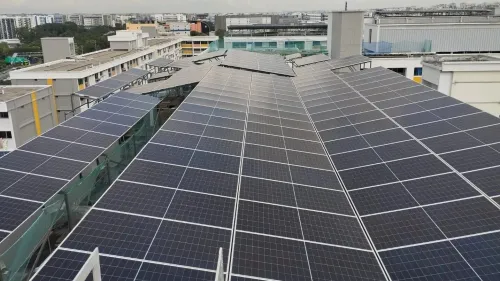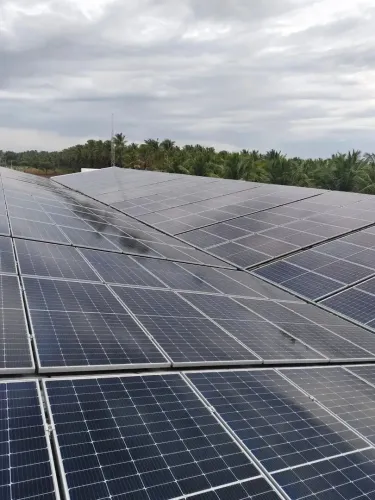
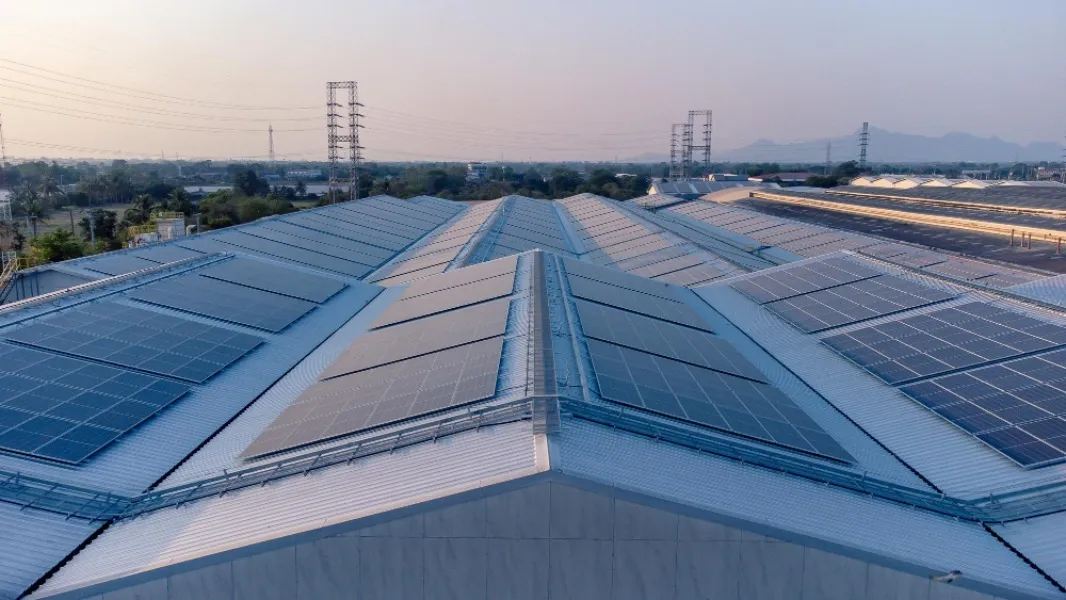
Factories often have large roof areas and substantial electricity demand, making solar an important option to evaluate. At the same time, an industrial installation can be more complex than a typical residential project because it must integrate with existing electrical infrastructure without interfering with production, maintenance, safety, or future expansion.
For facility managers planning an industrial roof top solar power plant in Madurai, Tamil Nadu, a structured pre-installation checklist can reduce avoidable design and operational issues.
1. Review the Facility's Electricity Profile
Start with actual consumption data.
Gather recent electricity bills, operating schedules, major load details, demand information, and any available interval consumption data.
Factories operating mainly during daylight hours may have different solar utilisation characteristics from facilities with continuous or night-shift operations.
The assessment should also account for planned machinery additions or production expansion.
2. Inspect the Industrial Roof
A large roof is not automatically a suitable solar roof.
The assessment should consider:
- Roof type and age
- Structural condition
- Existing rooftop loads
- Skylights
- Ventilation systems
- Exhaust outlets
- Drainage paths
- Shading
- Safe access routes
- Areas reserved for future equipment
Industrial roofs may already contain systems essential to production, so solar layouts should be coordinated around them.
3. Check Structural Suitability
Solar modules, mounting systems, and associated components introduce additional loads and wind-related forces.
Structural suitability should therefore be considered before installation.
This is particularly important for older industrial buildings or roofs that have undergone previous alterations.
4. Map the Electrical Infrastructure
Industrial facilities can have complex distribution arrangements.
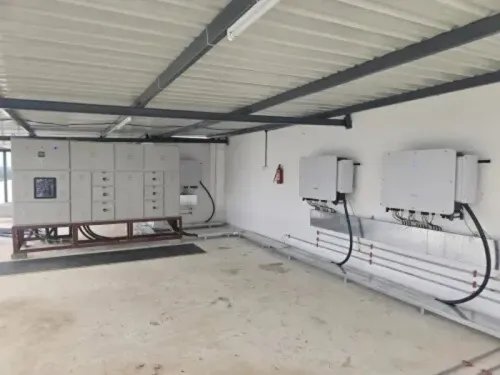
The solar design team needs to understand relevant transformers, distribution panels, electrical rooms, cable routes, connected loads, protection systems, and interconnection requirements.
This helps determine an appropriate integration approach rather than treating solar as an isolated rooftop installation.
5. Evaluate Safety Provisions
Safety planning should cover both installation and long-term operation.
Important areas include earthing, surge protection, isolation, cable management, equipment labelling, access control, fire-safety coordination, and maintenance procedures.
The exact requirements should reflect the facility and applicable standards.
6. Protect Production Continuity
Installation activity should be planned around factory operations.
Cable routing, lifting equipment, roof access, electrical shutdown requirements, and commissioning activities may need coordination with production schedules.
For a busy Madurai industrial facility, careful scheduling can reduce unnecessary operational disruption.
7. Understand the Generation Estimate
Ask how projected generation was calculated.
Shading, module orientation, temperature, equipment efficiency, system losses, maintenance, and weather conditions can influence actual output.
Performance expectations should be based on transparent assumptions rather than an unexplained headline number.
8. Define Maintenance Access
Technicians need safe access to modules, inverters, cables, and other equipment after commissioning.
Layouts should provide appropriate pathways and should not obstruct drainage or essential rooftop systems.
Maintenance planning is easier when it is incorporated during design rather than added later.
9. Establish Monitoring Responsibilities
Determine who will monitor generation and system alerts.
Unexpected reductions in output may otherwise remain unnoticed for extended periods.
Clear monitoring responsibilities help facility teams respond to faults or abnormal performance more efficiently.
10. Evaluate the Provider Beyond Price
Industrial solar requires coordination across structural, electrical, operational, and safety considerations.
Orbit Solar India Pvt Ltd provides solar solutions for industrial and other applications, allowing projects to be assessed according to individual site requirements.
For factories in Madurai, procurement should compare system design, component specifications, installation methodology, warranties, monitoring, maintenance support, and project execution capability alongside commercial pricing.
A thorough checklist turns rooftop solar procurement from a simple equipment purchase into an engineering decision aligned with the factory's long-term operating requirements.
Keywords