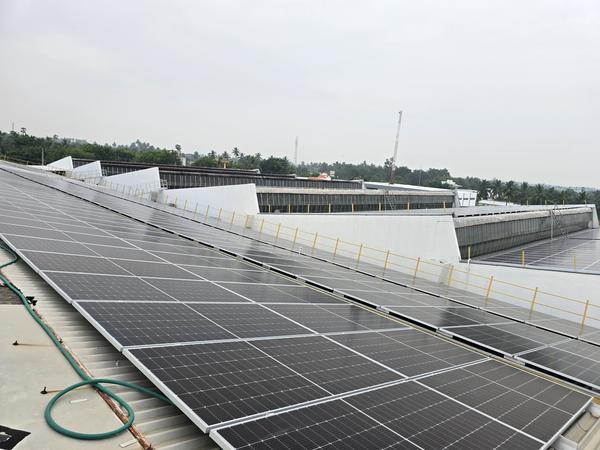
An On-Grid (or grid-tied) solar power plant is a system that works directly with the utility grid, allowing users to power their homes with solar energy while exporting excess power to the utility network. It requires no battery storage, instead using a net meter to track net energy usage, making it cost-effective and low-maintenance. Key Components of an On-Grid Solar System Solar Panels (PV Modules): Convert sunlight into direct current (DC) electricity. On-Grid Inverter: Converts DC electricity into alternating current (AC) and synchronizes with the grid. Net Metering/Bidirectional Meter: Measures the electricity consumed from the grid and electricity exported from the solar system. Mounting Structure: Fixes the panels in a secure position. Balance of System (BOS): Includes cables, switches, and junction boxes. Working Principle Generation: Solar panels produce DC electricity during the day. Conversion: The inverter converts DC to AC for appliance use. Consumption: The home consumes the generated power first. Export/Import: Excess Generation: If solar production exceeds demand, the extra electricity is sent to the grid. Low Generation: If demand exceeds production, the grid supplies electricity. Net Metering: At the end of the billing cycle, you are charged only for the “net” amount of energy used. Key Benefits Lower Electricity Bills: Drastically reduces utility charges. Cost-Effective: No expensive battery backup required, reducing upfront costs. Net Metering Credits: You can earn credits for excess energy fed into the grid. Low Maintenance: Fewer components compared to off-grid systems. Limitations No Power During Outages: For safety reasons, the inverter shuts down during a grid failure (anti-islanding). No Battery Backup: Energy produced cannot be stored for nighttime use.
Address
100/112, Poompuhar Nagar, Kattabomman Street, Ganapathy, Coimbatore, Tamil Nadu 641006
Coimbatore, India, 641006