
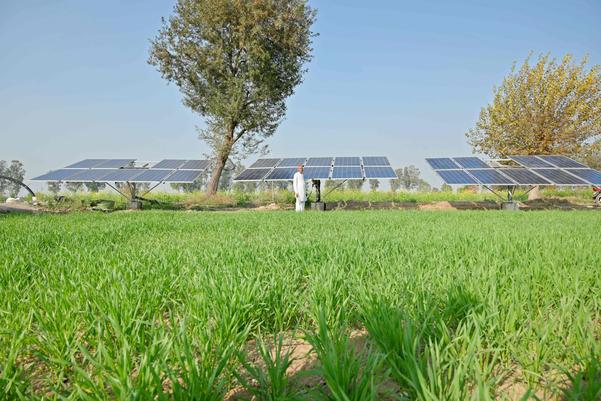
Agriculture solar pumps use photovoltaic panels to convert sunlight into electricity, powering submersible or surface motors to draw water for irrigation without diesel or grid dependence. These systems lower operating costs, offer high durability (20-25 years), and operate during the day, ideal for remote farms. Key Components and Working Principle Solar Panels: Convert sunlight into DC electricity. Controller/Inverter: Manages the speed of the motor and converts power (DC to AC if necessary). Pump Set: Submersible (for deep wells) or surface-mounted (for shallow water sources). Working: Sunlight hitting panels produces DC power Controller converts/regulates power Motor drives pump to lift water. Key Benefits for Farmers Cost Savings: No fuel bills (diesel) or electricity bills. Reliability: No power cuts or low-voltage issues, enabling daytime irrigation. Easy Maintenance: Few moving parts, leading to low maintenance costs. Sustainability: Reduces CO2 emissions and supports eco-friendly farming. Capacity and Subsidies Solar pump capacity is matched to land size, typically with government support under schemes like PM-KUSUM (Component B). 3 HP: Suitable for small landholdings up to 2.5 acres. 5 HP: Suitable for land from 2.51 to 5 acres. 7.5 HP or more: Suitable for land above 5 acres. Application: Subsidies drastically reduce upfront costs, and MNRE-certified pumps are recommended for quality assurance. Common Applications Irrigation for crops, greenhouses, and orchards. Livestock watering and aquaculture. Drinking water supply in rural, off-grid areas.
Address
100/112, Poompuhar Nagar, Kattabomman Street, Ganapathy, Coimbatore, Tamil Nadu 641006
Coimbatore, India, 641006