

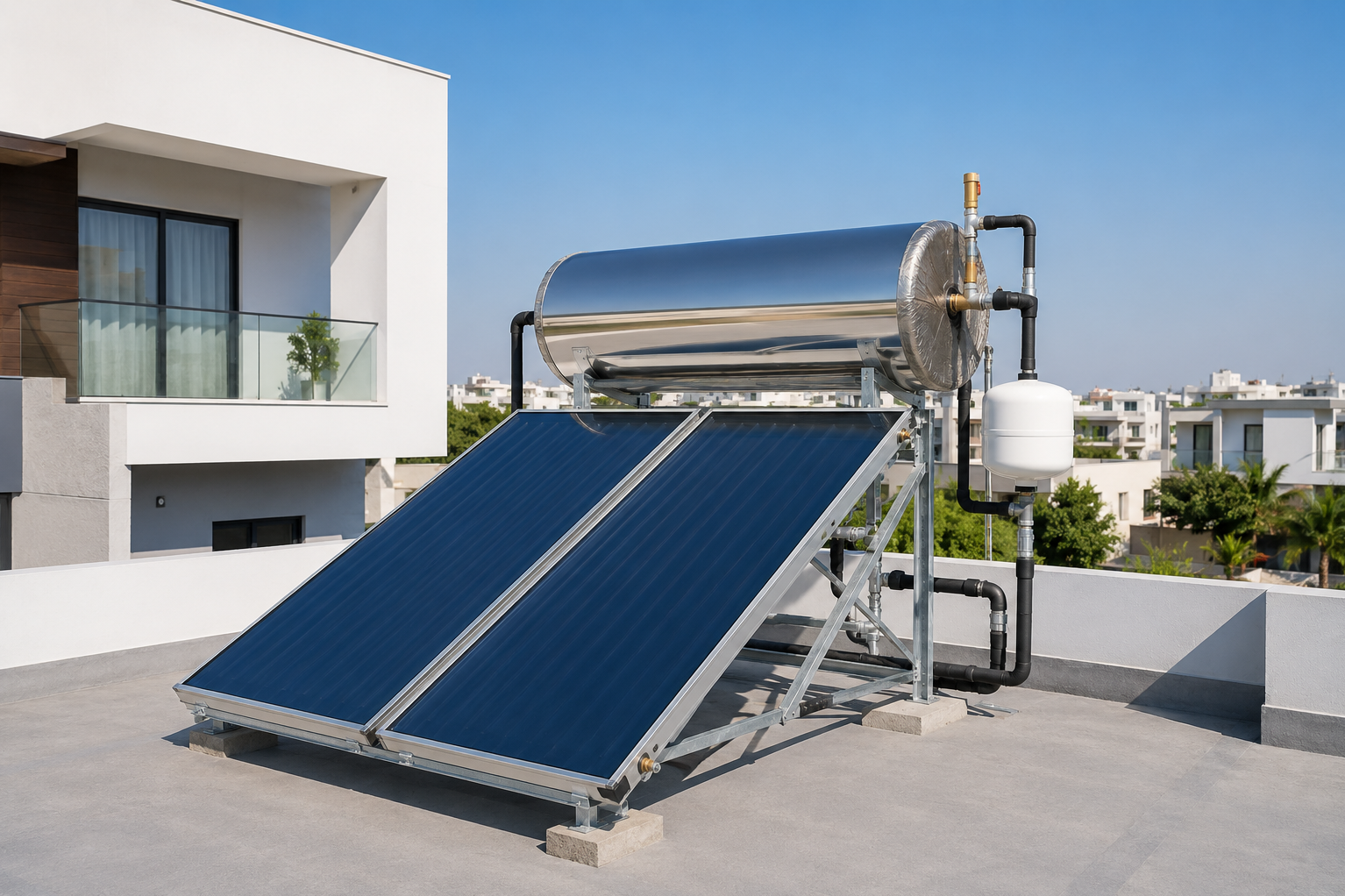
Hot water systems have evolved considerably over the years, and today's homeowners expect both comfort and efficiency. A Residential Pressured Solar Water Heater is designed to provide hot water at consistent pressure while reducing electricity consumption through the use of renewable solar energy. It is especially suitable for modern homes with multiple bathrooms, pressure pumps, and advanced plumbing systems.
In Kodaikanal, where families often require dependable hot water throughout the year due to the cooler climate, selecting the right pressured solar water heater requires careful planning.
What Is a Residential Pressured Solar Water Heater?
Unlike gravity-based solar water heating systems, a pressured solar water heater operates under water pressure supplied by the municipal connection or pressure pump. This allows hot water to flow directly through taps and showers with consistent pressure, improving everyday convenience.
A typical system includes:
- Solar collectors
- Pressurized insulated storage tank
- Copper heat exchanger
- Safety pressure valves
- Insulated piping
- Mounting structure
These components work together to provide reliable hot water while maintaining system safety.
Why More Homeowners Are Choosing Pressured Systems
Modern residential buildings often have plumbing layouts that benefit from pressurized water heating systems.
Some major advantages include:
Consistent Water Pressure
Residents enjoy a steady flow of hot water across multiple bathrooms without noticeable pressure loss.
Better Compatibility
These systems integrate well with pressure pumps, overhead tanks, and contemporary plumbing designs.
Improved User Comfort
Consistent water flow makes showers, kitchen use, and household cleaning more comfortable and efficient.
Reduced Electricity Consumption
Since sunlight provides the primary heating source, dependence on electric geysers is significantly reduced.
Long-Term Value
Quality pressured solar water heaters are built for extended service life with proper maintenance.
How to Choose the Right System
Every household has unique requirements, making it important to evaluate several factors before purchasing.
Consider:
- Family size
- Daily hot water usage
- Number of bathrooms
- Available rooftop space
- Roof orientation
- Local climate
- Existing plumbing system
These factors help determine the ideal storage capacity and collector size.
Common Buying Mistakes to Avoid
Many homeowners focus only on price without evaluating system suitability.
Avoid these common mistakes:
- Selecting inadequate storage capacity
- Ignoring water pressure requirements
- Choosing low-quality insulated tanks
- Overlooking warranty coverage
- Hiring inexperienced installers
- Neglecting after-sales service
A properly planned installation helps avoid future operational issues.
Questions Worth Asking Before Purchase
Before finalising a solar water heater, ask the supplier:
- Is the system suitable for my home's plumbing?
- What collector technology is recommended?
- How much rooftop space is required?
- What maintenance schedule should be followed?
- What warranty is available on the tank and collectors?
- Will installation and testing be handled by trained professionals?
Clear answers provide greater confidence in the investment.
Why Installation Quality Influences Performance
Proper installation affects both efficiency and durability. Correct collector positioning, insulated piping, secure mounting, and pressure safety mechanisms all contribute to reliable operation.
Homeowners in Kodaikanal frequently rely on experienced providers such as Orbit Solar India Pvt Ltd, which recommends systems based on household water demand, plumbing design, and environmental conditions rather than offering a one-size-fits-all solution.
Choosing a Solar Water Heater That Meets Future Needs
A Residential Pressured Solar Water Heater is a practical solution for households seeking energy savings without compromising comfort. By evaluating system capacity, water pressure compatibility, equipment quality, and installation expertise, homeowners can enjoy reliable hot water while reducing long-term energy costs and making better use of renewable solar energy.


