
Coimbatore
08048036626
Solar Off Grid Power Plant by Orbit Solar India Pvt Ltd

Solar Off Grid Power Plant

Phone Number

08048036626

Please keep 0 before dialling the number.

Mon-Thu: 10 AM - 2 PM • Fri: 3 PM - 7AM

Other Website Visit our other website
Address 100/112, Poompuhar Nagar, Kattabomman Street, Ganapathy, Coimbatore, Tamil Nadu 641006

Coimbatore, India, 641006
Description

Off-grid solar power plants are independent, battery-based systems that generate, store, and supply electricity without relying on the utility grid. They consist of solar panels, batteries (lead-acid or lithium), a solar inverter/charger, and charge controllers (MPPT or PWM). These systems provide uninterrupted power for rural areas and homes needing to eliminate electricity bills. Key Components & Operation Solar Panels (Monocrystalline/Polycrystalline): Capture sunlight and generate DC electricity. Solar Inverter (Off-grid/Hybrid): Converts DC from batteries into 230VAC 50Hz electricity. Battery Bank (Lead-acid/Lithium-ion): Stores excess energy for use at night or during power outages. Charge Controller (MPPT/PWM): Manages charging to prevent overcharging. System Components: Mounting structure, array junction box, and DC/AC cables. Greenon Energy Greenon Energy Technical Details & Sizing 1 kW to 10 kW Systems: Suitable for homes; 1kW handles basic loads (lights, fans), while 5kW-10kW can support households with higher power consumption. Battery Backup: A 2kW system can include a 25.6V/100AH Lithium-ion battery, while larger systems (10kVA) might use 10+ batteries, as shown in Greenon Energy 10KVA Solar Plant specifications. Efficiency & Protection: Off-grid inverters often feature an efficiency of around 85%, with built-in protection against overloads, over-temperature, and short circuits, notes Greenon Energy 8KVA Solar Plant details. Maintenance: Regular cleaning of panels is required. Battery banks need periodic replacement (2-3 years for Lead-acid, up to 10 years for Lithium). Greenon Energy Greenon Energy Benefits & Applications Independence: Perfect for areas without grid access, as supported by the Ministry of New and Renewable Energy (MNRE) Off Grid Solar Policy. Reliability: Provides constant power regardless of grid fluctuations. Cost: 1kW systems start around ₹69,699, with higher capacities up to 10kW costing approximately ₹7 lakh, including installation.

Other Products

view all

6814772a5d263414004dd4a4 Card 2

product image
Industrial Rooftop Solar Power Plant

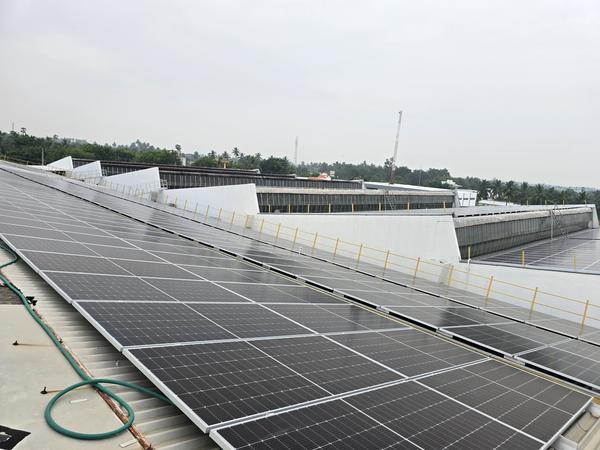
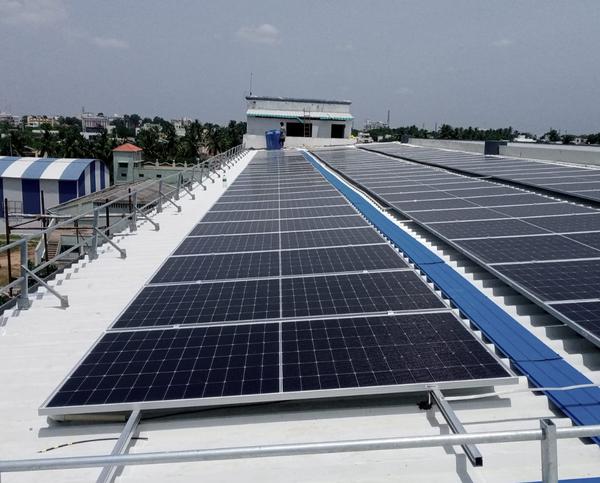
Industrial rooftop solar plants, installed on factory and warehouse RCC or metal sheet roofs, convert sunlight into electricity, significantly reducing industrial energy costs and grid dependency. These large-scale systems (100 kW+), often using high-efficiency modules, require robust mounting structures, careful electrical planning, and, for RCC, leak-resistant anchoring. Key Aspects of Industrial Rooftop Solar (RCC & Sheet) Rooftop Types: RCC Roofs (Concrete): Common on industrial buildings; require concrete pedestal mounts. They allow for flexible orientation but require waterproofing during installation to prevent leakage. Sheet Roofs (Metal/Tin Sheds): Common on factory sheds. Solar panels are installed using customized clamps or L-angles, ensuring no penetration is needed, which prevents leakage. System Components: Solar Modules (Panels): High-efficiency photovoltaic modules. Mounting Structure: Hot-Dip Galvanized Iron (HDG) or Aluminium (for sheet roofs) structures are essential for durability against rust. Inverter/PCU: Converts DC electricity (from panels) to AC (for machinery). Must be capable of automatic synchronization. Balance of System: Cables, Combiner boxes, AC Distribution Board (ACDB), and safety devices. Installation & Technical Specs: Orientation & Tilt: Panels are aligned optimally to maximize energy generation, usually south-facing (or angled specifically for sheet roofs). Fasteners: SS-304 fasteners are recommended for corrosion resistance. Cleaning Mechanism: Adequate space is left for cleaning, which is crucial for optimal performance. Benefits: Cost Savings: High ROI through reduced grid dependence. Space Utilization: Utilizes large, otherwise unused roof areas. Reduced Heat: Panels provide shade, reducing the building’s internal temperature. Safety & Regulatory: Installations should comply with local electricity authority (DISCOM) regulations for net metering. Proper grounding and lightning protection are required.

6814772a5d263414004dd4a4 Card 2

product image
Ground Mounting Solar Power Plant

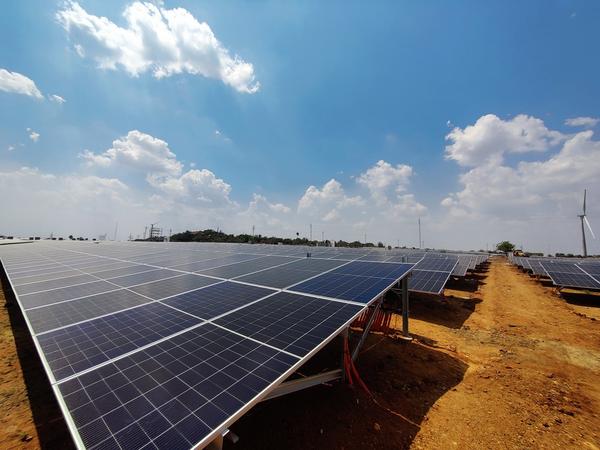
Ground-mounted solar power plants are photovoltaic systems installed on the ground rather than rooftops, typically using metal frames, concrete, or pile foundations to secure panels in open areas. They offer superior energy generation, easier maintenance, and higher scalability compared to rooftop systems, commonly using fixed-tilt or tracking structures to maximize sun exposure. Key Aspects of Ground-Mounted Solar Structure and Mounting: Ground Mounted Solar Power Plant: Working, Types, Pros ... Panels are mounted on ground-mounted structures, such as fixed-tilt racks (constant angle) or single-axis trackers (follow the sun). They often use galvanized steel frames secured to the ground via pile foundations or concrete blocks. Land Requirements: Requires large open space with minimal shading. Approximately 5 kW requires roughly square meters of land. Applications: Ideal for utility-scale power plants, commercial solar farms, and large residential installations. Performance: Generally higher yields than rooftop systems due to optimal tilt and orientation. Installation Steps Site Assessment: Evaluating sunlight access, land topography, and shade. Foundation Setting: Driving steel piles or pouring concrete foundations for the racking. Structure Assembly: Erecting the mounting structures. Panel Installation: Securing PV panels onto the structures. Electrical Setup: Installing inverters (string or central) and trenching for cables. Grid Connection: Connecting the system to the grid via transformers. Pros and Cons Pros: Easy to clean and maintain; easier to expand in the future; higher performance. Cons: Higher upfront cost than roof systems due to extra foundation/materials; higher land usage. Costs (In India) Average Cost: ₹45,000 to ₹70,000 per kW, depending on the structure and site conditions. Land Preparation: Costs typically range from ₹5,000 to ₹10,000 per kW. Maintenance: Generally ₹2,000 to ₹5,000 per year per kW. Components Solar PV Modules: High-efficiency panels. Ground Mount System: Ground-Mounted Solar System | KPI Green Energy Galvanized steel racks, fixed or tracking. Inverters: Convert DC to AC. Transformer: Steps up voltage for the grid. Monitoring System: Real-time performance tracking. These systems are highly durable, with a lifespan of 25+ years, making them a significant long-term investment for renewable energy production.

6814772a5d263414004dd4a4 Card 2

product image
On Grid Solar Power Plant

An On-Grid (or grid-tied) solar power plant is a system that works directly with the utility grid, allowing users to power their homes with solar energy while exporting excess power to the utility network. It requires no battery storage, instead using a net meter to track net energy usage, making it cost-effective and low-maintenance. Key Components of an On-Grid Solar System Solar Panels (PV Modules): Convert sunlight into direct current (DC) electricity. On-Grid Inverter: Converts DC electricity into alternating current (AC) and synchronizes with the grid. Net Metering/Bidirectional Meter: Measures the electricity consumed from the grid and electricity exported from the solar system. Mounting Structure: Fixes the panels in a secure position. Balance of System (BOS): Includes cables, switches, and junction boxes. Working Principle Generation: Solar panels produce DC electricity during the day. Conversion: The inverter converts DC to AC for appliance use. Consumption: The home consumes the generated power first. Export/Import: Excess Generation: If solar production exceeds demand, the extra electricity is sent to the grid. Low Generation: If demand exceeds production, the grid supplies electricity. Net Metering: At the end of the billing cycle, you are charged only for the “net” amount of energy used. Key Benefits Lower Electricity Bills: Drastically reduces utility charges. Cost-Effective: No expensive battery backup required, reducing upfront costs. Net Metering Credits: You can earn credits for excess energy fed into the grid. Low Maintenance: Fewer components compared to off-grid systems. Limitations No Power During Outages: For safety reasons, the inverter shuts down during a grid failure (anti-islanding). No Battery Backup: Energy produced cannot be stored for nighttime use.